
What Does an Alternative Path in Your Children's Lives and Education Really Mean?
What It Looks Like to Step Outside the System and Carve Your Own Path Based on Your Children's Specific Needs and Learning Accessibility

When you think about an “alternative path” in your children’s lives and education, what does that truly mean to you?
For me the “standard” path is going to school 5 days a a week, 7-8 hours per day, and participating in the “standard curriculum” set forth by the school district for the particular grade level your child is in according to their birthdate/age. This path begins often at age 5, or kindergarten in the United States, and is often a full day of school from the start. (Let’s not even get started right now on how sending a 5-year old to a 7 hour school day is intense!)
The “alternative path” would be pretty much anything that deviates from that norm in society.
Whether you are the family that is leaving traditional school to homeschool, or you are navigating a vastly different learning plan in the traditional schools, the truth is when you have a neurodivergent learner often the “typical” learning path simply doesn’t help your children to thrive.
So let’s talk about the different ways you can take an alternative path and what each of these paths can lead to. (And, yes, many of us will fall into multiple categories of “alternative paths.”)
Leaving Traditional School
This is often the category that most people will think of when it comes to taking an alternative educational path.
Leaving traditional school can come through many deciding factors. Often when the traditional school is not providing children what parents believe they need — a disconnect happens and the parents will usually start looking for alternative options.
For my daughter this path appeared because the elementary school in our district was not providing her with the accommodations she needed for her Autism, PDA diagnosis.
For other parents, it might be a difference of beliefs or lack of trust in the educational system.
Whatever the reason for leaving traditional school, the next step is typically either homeschooling or unschooling.
But what most people forget about in between is a process called “deschooling,” in which you literally spend months to years unlearning everything the system ingrained within you. And deschooling is honestly more for the parents rather than the kids. It is parents who have these notions of what education should like ingrained into our subconscious from decades of believing that traditional schooling is the only path that we are “allowed” to take.
Navigating Diagnoses — PDA, Autism, and Other Neurodivergent Identities
For most families, once a diagnosis such as autism, PDA (I know it’s not an “official” diagnosis in the U.S., but I hope that with the work of groups like PDA North America this will change in my daughter’s lifetime), or other neurodivergent diagnoses is presented to us — especially when those diagnoses come with accommodations and needs that, quite honestly, most schools have no idea how to support — that is usually the moment when parents look at each other and realize a decision needs to be made about what their child’s “schooling” or “non-schooling” environment will look like moving forward.
It’s no surprise that my family also falls into this category (like I said, most of us will be in multiple categories of “alternative paths.”)
When we discover that our child responds differently to the way traditional schools are set up, and that traditional school actually leads to increased dysregulation and anxiety, among other things, we have to really take a hard honest look at whether making the child go to school is actually helping them or harming them.
For my daughter, her nervous system was so overwhelmed at the thought of having to get to school in the morning, then once she was there it was like every fiber of her being felt resistance and lack of control. With PDA, the biggest support you can give someone is to provide them with autonomy and allow them how to guide their day. Well, guess what? Regular school does absolutely ZERO of that in terms of autonomy and letting kids guide their day. It’s pretty much entirely the opposite. The kids must adhere to a set schedule, they are penalized if they are late or absent, and they must stick to a strict curriculum set forth by the board of education. There is very little wiggle room, and for kids with PDA, that simply doesn’t work to support their nervous system. Thus, an alternative path for education and well-being is born.
Following a Child’s Innate Rhythms & Neurodivergent Support Needs
This leads directly into our children’s innate rhythms and neurodivergent support needs. I couldn’t have placed this subtitle in a more appropriate place within this article!
You guessed it — forcing kids to wake up in the mornings, get to school, stay there for 7-8 hours, and expecting them to “focus” the entire time… that is a nightmare for a child with neurodivergent support needs.
That type of set up is just not going to work. Most often parents need to go to their jobs, so they have no choice but to send their neurodivergent children into the hands of the school systems. And yes, I understand that some schools and staff are more supportive. But we are talking about a system as a whole. The system as a whole has a lack of understanding of very specific unique support needs such as PDA.
So how can we advocate for our child’s innate rhythms and support needs? It begins by educating ourselves. If you are someone who has no choice but to send your child to a school, I am not speaking negatively against you. I understand how the system works. I just chose to exit the system because I had a different path— one that included this substack you’re reading.
It starts with us truly seeing our children and what best supports them. If a later wake-up time supports your child, then advocate for a later school start in their IEP meeting. Schools will tell you they “can’t” make these accommodations but if you push them hard enough— they can. The truth is they don’t want to be in legal trouble. Of course this varies by state (I live in Illinois). States have protections in place and FAPE (free and appropriate public education) is one of them. If a child can’t access school because they aren’t being given appropriate accommodations based on their documented diagnosis and support needs, that is 100% on the school district to figure it out.
As an almost 40-year old woman, I still struggle with early wake-ups. And it’s not because I’m “lazy.” Some bodies have a natural rhythm that wants to sleep later, and if that’s what they need then it should be honored. Too often we hear praise for “early risers” and the ones that have perfect attendance. These ideas get implanted into our brains as if something is wrong with us because we are not an early riser, and our attendance isn’t perfect. These are all ideas that the systems in control planted in our brains. These are not our ideas. The exception is if you have done the work to deprogram from the system, and you realize “hey I really am an early riser and I get my best work done at that time.” But that would be you discovering your own innate rhythms, not someone else deciding your rhythms for you.
As a parent who chooses to honor your child’s innate rhythms and neurodivergent support needs, you are already operating outside of the established system mentality. This counts as an alternative path, because you are doing things differently than 95% of other parents (that is not a solid statistic but I imagine it would be this high and I’ll make a point to look up statistics later.)
You’ve already taken the steps to do things differently, to parent differently than the past generations, and to step outside the cycles that weren’t helping children thrive in the past.
Repair After School Trauma / Deschooling
Once we made the decision to exit school in 2025, it wasn’t just a clear path to “homeschooling” or learning at home. Because most kids who exit traditional schools are coming out with school trauma. Especially those that are highly misunderstood for their nervous system or learning disabilities.
That is where nervous system repair and deschooling come into play.
My daughter spent a few months just unwinding from everything that had happened in the third grade. The misunderstanding of her needs, the forced expectations to “get into the classroom” despite her visible anxiety — shaking hands and racing heartbeat.
We let her unwind. We didn’t force academics. I read books on unschooling and learned that it’s best to go through a process of deschooling first before introducing any sort of new learning at home.
This is especially true for autistic children and those with the PDA profile. Pushing learning at home after their nervous system was in constant fight/flight for months, sometimes years, is not the solution.
It will only make them retreat even more. Ask me how I know.
You can expect repair after school trauma to take months, even years, depending on how long the child was experiencing it. For my daughter, her serious struggles began at the end of the first grade. So it is about a solid 2 years of trauma we are unwinding at the moment.
When you allow your child to heal, you are going outside the expected rules of society. Because society pushes for kids to be in school. Parents are shamed for pulling their kids out of school. Even if it’s for reasons such as school trauma. We are made to feel that we are exaggerating, or that it “wasn’t really as bad as you’re making it out to be.”
Sound familiar? It’s the same thing that happens to victims of violence and assault. Their accounts are minimized; their personal experiences diminished at the hands of the “all powerful” bureaucracy.
To allow your child to heal is taking an alternative path in their life and education.
It sounds ridiculous — I know. But healing is just not prioritized in this society. We are expected to push through because “we have to work,” and “kids have to be in school.”
So it is seen as radical to stop all of these expectations and allow your child to simply tune into their innate rhythms and live their life according to how their body functions rather than falling in line and pushing against their exhaustion or dysregulation to fit in.
Letting Go of Outside Expectations
That brings us right to letting go of outside expectations.
When you choose an alternative path for your child’s life and education, you are making a bold statement. You are declaring that you are no longer going to adhere to outside expectations to define your family’s way of being in this world.
That is huge. Because remember— most families are following outside expectations. This comes down to listening to your mama or daddy intuition about what’s best for your kids. Most of the time what outsiders say is best — is NOT best for your kids.
It’s about discerning the outside noise and the inevitable criticism that you will come up against and standing your ground when these voices do crop up.
At the end of the day, you are the one parenting your child(ren) and not the outsiders trying to tell you what’s best. So it only makes sense for you to tune into your intuition to decipher what’s best for your family.
Letting go of societal expectations is not an easy task. I talk a lot about deprogramming from the system in my Skool community, Unschooling Motherhood. It’s free to join and I’d love to have you over there if you resonate with this post.
The deprogramming and “deschooling” process for adults is much more complex and will take longer than for our kids. Because we have been ingrained into the systems for many more years than our kids have.
So it only makes sense that the first step to taking an alternative path is to begin the process of deprogramming and deschooling ourselves first.
Redefining Your Child’s “Success”
After you decide which alternative path you’re taking in your child’s life and education, often there is a period within the deschooling and deprogramming process in which you have to let go of the expectations of what success looks like.
We are programmed to believe success is one path. Clue: it’s not.
Success isn’t only completing each grade in school, getting perfect exam scores and getting into the best college.
That is ONE family’s idea of success. That is society’s idea of success.
That is not everyone’s idea of success.
The truth is — Autistic and PDA kids may decide they want to go to college in the future — and if that’s their decision I am all for it.
But often parents are the ones pushing them to “fit in” to neurotypical society so much that it’s actually hurting them. Are they ever asked what they want to do? Are they given autonomy?
Within my own deschooling and deprogramming process, I have done deep inner exploration on this and came to the realization that I actually have no say in what my daughter decides to do with her life. She will be given the full autonomy to decide.
If she decides to pursue a college education, that will be her decision, not mine.
If she decides to explore the world, that will be her decision.
With her diagnosis, autonomy is the key to her happiness. If she loses autonomy over her life, her nervous system suffers. It’s a very intricate balance we have to maintain, but I am willing to be her advocate for as long as she needs so she can thrive in her own way.
A Final Note
If you see yourself in these threads, I’d love to connect.
I created the anthology “11 Stories From Parents Who Have Taken Alternative Paths in Their Children’s Lives and Educations to Honor Their Neurodiversity and Unique Gifts” because of our personal lived experiences with stepping outside the system and carving our own path forward.
This is more than a collection of stories; it’s a living testament to how as parents we have the collective power to rise up and forge better pathways for our neurodivergent kids.
Whether you fought for accommodations in a school district, won a legal battle in support of your child, created a new way of learning or a new curriculum, or simply have a story about standing up to “authorities” in favor of your kid’s nervous system and felt sense of safety — I want to hear your stories.
If you feel resonance with this, please reply to this post. And if you want to learn more about this project, jump on over here.
If you’re ready to apply to become an author, that is also ready for you
here.
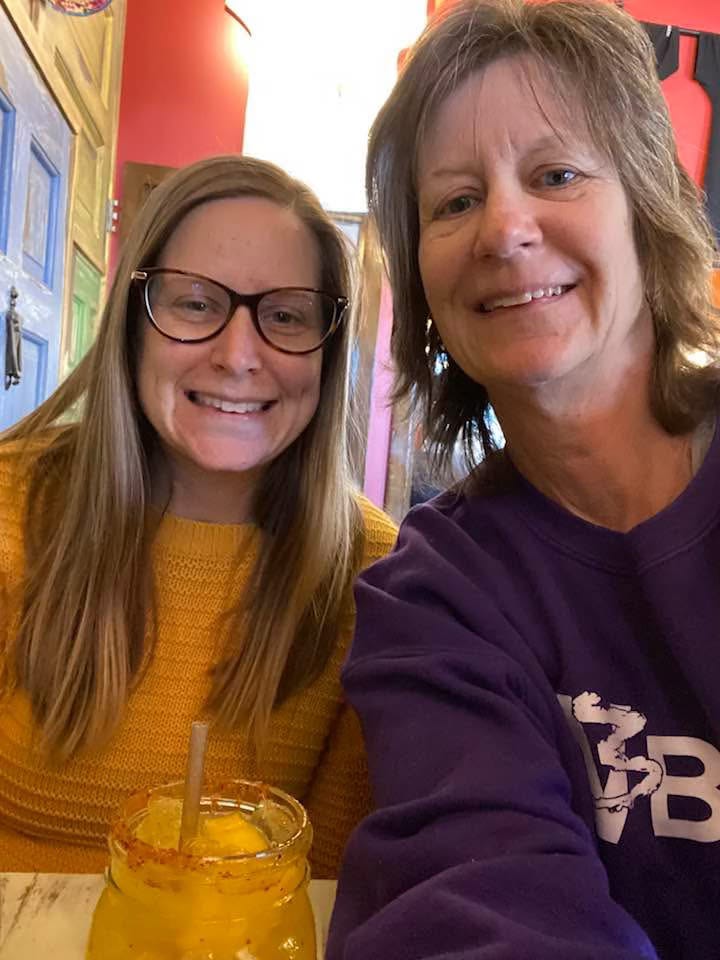
Photo of me and my mom on her birthday a few years ago. She is my greatest inspiration for this content. She always taught me to pursue my passions relentlessly, and she was my biggest reader/supporter. I miss her so incredibly much. Happy 65th Birthday, Mom. This article is dedicated to you.